When to Book Your Tee Time: What Golf Pricing Teaches Us About FIA Rates
Did you know the day you book a tee time can change the price you pay? Saturday morning, prime time, at a top-rated course — that's peak demand. You're paying a premium. But that same course on a Tuesday afternoon? Same greens, same fairways, same views. Just a different price tag.
The course didn't change. The timing did.
Fixed Indexed Annuity crediting rates work the same way. And right now, the market conditions that drive those rates are worth paying attention to.
How Tee Time Pricing Actually Works
If you've ever booked a round online, you already understand supply and demand. Peak times — Saturday and Sunday mornings, holidays, perfect weather weekends — cost more because everyone wants them. Off-peak times — weekday afternoons, shoulder seasons — cost less because demand drops.
The course quality doesn't change between Saturday and Tuesday. The greens are the same speed. The pins are in the same positions. The only thing that shifted is when you showed up.
Smart golfers learn to read the pricing calendar. They know when to book to get the best value. The same principle applies to locking in FIA rates — if you know what to look for.
FIA Rates Follow the Same Logic
When an insurance carrier sets a cap rate or participation rate on a Fixed Indexed Annuity, they're not pulling numbers out of thin air. Behind the scenes, they're purchasing options in the derivatives market. Those options are what give your FIA its upside potential — the ability to earn returns linked to an index like the S&P 500 without risking your principal.
The "price" of those options depends on two main ingredients:
- Treasury yields — specifically the 10-Year Treasury. This is where carriers park their general account assets. Higher yields mean more bond income, which gives them a bigger budget to buy options. More budget means better cap rates and participation rates for you.
- Market volatility (VIX) — this measures how much uncertainty is priced into the market. When the VIX rises, options get more expensive. That's not automatically bad — it depends on whether Treasury yields are rising fast enough to offset the cost. When yields can't keep pace with volatility, carriers feel the squeeze, and rates get pressured downward.
Think of it this way: Treasury yields are the course revenue, and VIX is the cost of maintaining the greens. When revenue is strong and maintenance costs are manageable, the course can offer competitive tee time prices. When costs spike and revenue stays flat, prices go up — or in FIA terms, rates come down.
What the Market Is Telling Us Right Now
Let's look at the actual numbers. As of March 31, 2026, here's where things stand:
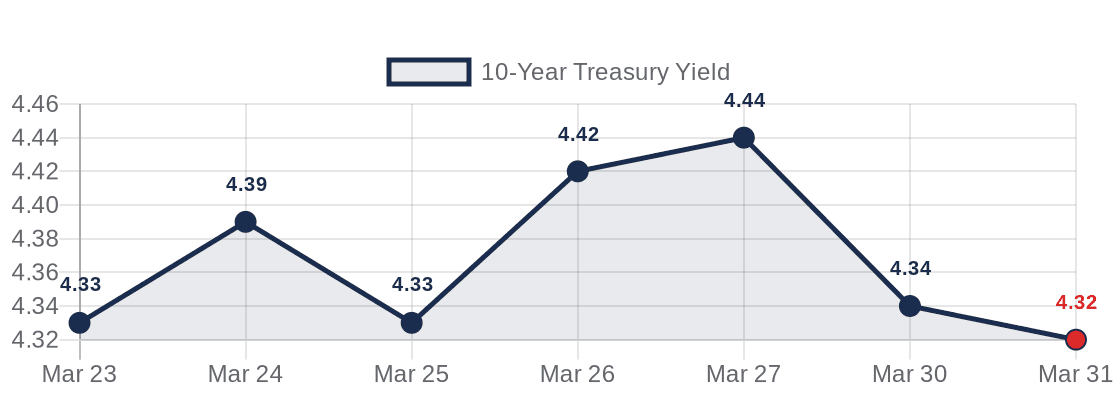
The 10-Year Treasury sits at 4.32%, essentially flat on the week (down just 1 basis point). A 4.32% yield is historically healthy — but it's not climbing. That means carriers aren't getting additional bond income to work with.
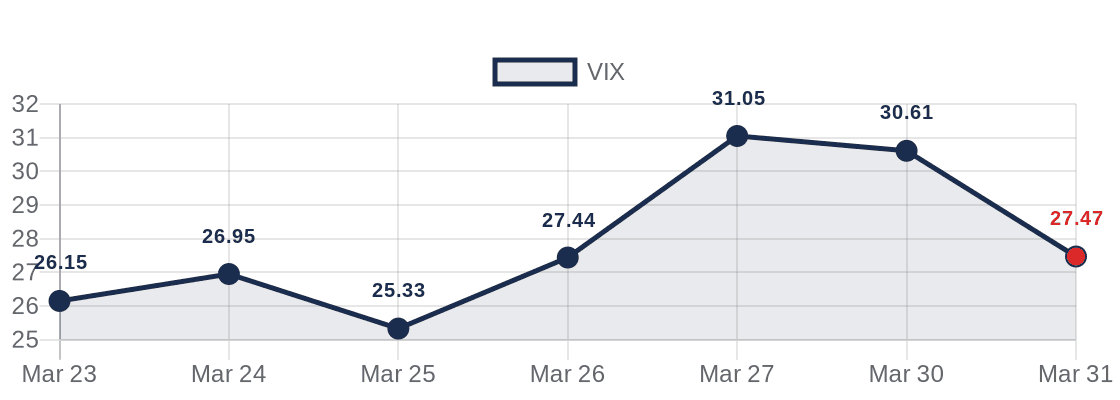
Meanwhile, the VIX is at 27.47, up from 26.15 at the start of the week. That's well above the long-term average of around 20. Elevated volatility means options are getting more expensive — and carriers have to pay more to fund the upside participation in your FIA.
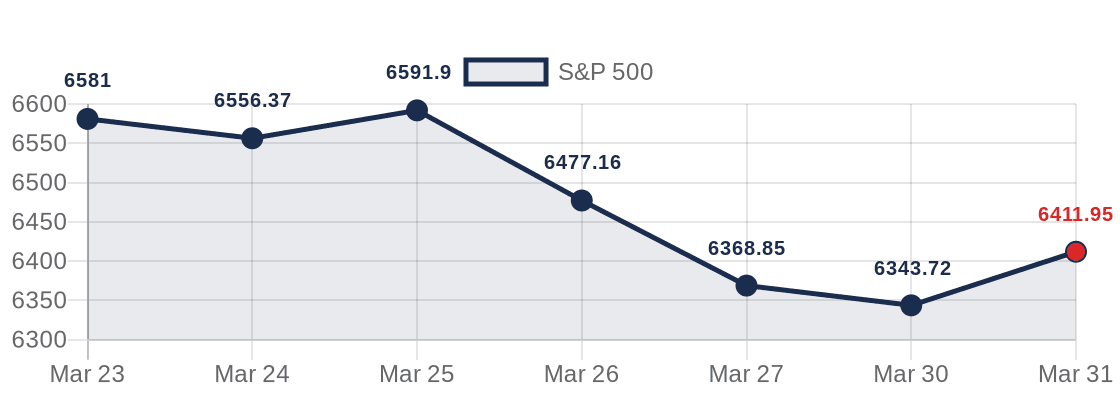
The S&P 500 dropped 2.57% this week to 6,411.95. The yield curve spread remains positive at +71 basis points (10Y minus 2Y), which supports insurer portfolios — but the VIX climbing while yields stay flat creates real pressure.
The FIA rate environment signal right now: headwinds for crediting rates. The VIX is climbing while yields offer no offset — rising options costs without additional bond income to fund them.
Why This Matters: Reading the Conditions
FIA rate windows open and close based on these market conditions. When Treasury yields are strong and volatility is low, carriers can offer more competitive rates. When the dynamic shifts — like it has this week — rate pressure builds and carriers may adjust downward.
This isn't about trying to time the market. Nobody can predict exactly when a carrier will change their rates. But understanding the environment you're operating in? That's the difference between making an informed decision and flying blind.
It's like checking the weather before your round. You're not controlling the wind — but you're adjusting your club selection because of it.
Why You Need a Caddie for This
Here's the thing — rate windows aren't advertised. Carriers don't send out alerts saying "hey, we're about to lower our cap rates next Tuesday." The changes happen quietly, and by the time most people notice, the window has already closed.
That's where working with an agent or advisor matters:
- We monitor these signals daily. Tools like our FIA Market Briefing track the VIX, Treasury yields, equity indexes, and yield curve spreads in real time so we can see which direction the wind is blowing.
- We know how to read the interaction. It's not just about one number — it's about how VIX, Treasury yields, and equity performance interact. That's a complex picture that takes experience to interpret.
- We can act on timing. When conditions are favorable and a client has a pending application, we know to move with urgency. When conditions are under pressure, we can help you understand what that means for your options.
- We stay objective. We're not trying to create urgency for the sake of it. We're trying to make sure you have the information you need to decide on your terms.
The Bottom Line
Don't book your financial tee time blindly. The market conditions on the day you lock in your FIA matter — just like the day and time you book your round. The course doesn't change, but the price does.
Work with someone who reads the conditions daily. Someone who understands what the numbers mean for your specific situation. Someone who'll tell you when the window looks good — and when it might be worth waiting.
That's what a caddie does. And that's what we're here for.
*This is educational content, not investment advice. FIA rates, market conditions, and individual circumstances vary. Consult with a qualified financial professional to understand what makes sense for your situation.*
Related Services
Like What You Read?
Let's discuss how these strategies can work for your retirement plan.

About the Author
Jed Monsen — The Annuity Caddie
Jed Monsen is the founder of Today Financial Agency and an income specialist licensed to help retirees across the U.S. build guaranteed retirement income. He works through the math with clients like a caddie reads a course — one hole at a time, no pressure.
